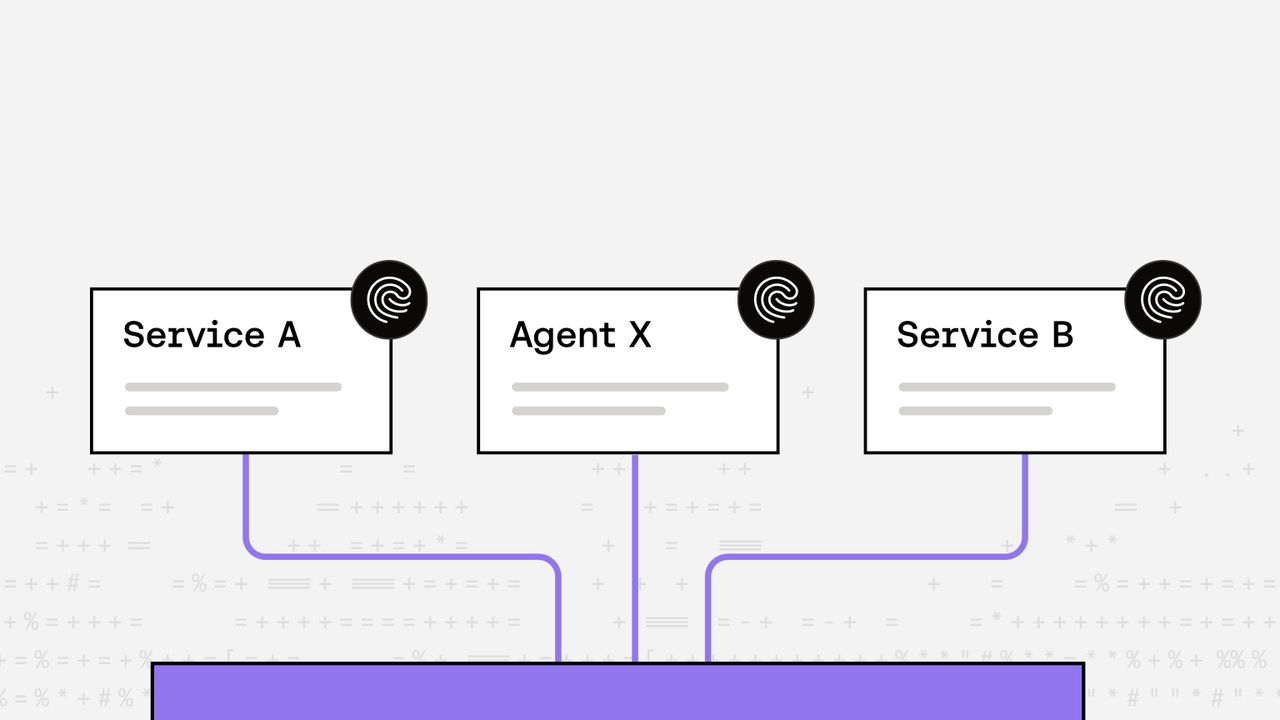
As modern infrastructure grows more complex, securing service-to-service communication has become a major challenge. Workloads, whether they’re running in Kubernetes, virtual machines, or serverless environments, need a way to prove their identity when interacting with other services.
Traditionally, this problem has been solved with shared secrets, API keys, or IP-based trust models. However, these approaches introduce security risks and operational overhead:
- API keys and static credentials can be leaked or stolen, giving attackers unauthorized access.
- IP-based trust models are unreliable in cloud environments, where workloads frequently move between different network locations.
- Manually managing TLS certificates is complex, and expired certificates can lead to service outages.
A strong workload identity system provides each service with a unique, verifiable identity that allows it to securely authenticate with others. This is where standards like SPIFFE (Secure Production Identity Framework for Everyone) come into play, along with x509 certificates, which offer cryptographic proof of identity and support for federated trust across environments.
Why Workload Identity Matters
When two humans communicate securely, they rely on established forms of identity, passports, driver’s licenses, or employee badges. Workloads need something similar to prove who they are in an automated, scalable way.
For years, many systems relied on network-based security. If a service was inside a trusted network, it was assumed to be legitimate. But as infrastructure has evolved, this model no longer works:
- Cloud workloads frequently change IPs, making network-based access controls unreliable.
- Microservices often need to communicate across different security boundaries, such as across cloud providers or between business partners.
- Security breaches often involve credential leaks, meaning long-lived tokens and API keys are a liability.
Instead of static credentials or network-based trust, a better approach is to give each workload a dynamic, cryptographically verifiable identity.
Workload Identity with SPIFFE
One way to standardize workload identity is through SPIFFE, an open framework that provides workloads with unique, structured identities.
A SPIFFE ID follows a format like:
spiffe://example.com/staging/accounting/service/auth-backendThis gives workloads a consistent way to identify themselves, regardless of where they’re running. Instead of relying on long-lived secrets, services can dynamically get short-lived x509 certificates that embed their SPIFFE ID. These certificates should be automatically rotated and used to authenticate workloads through mutual TLS (mTLS).
While SPIFFE provides a useful framework, the underlying mechanism that makes this work is a widely used standard for identity and encryption, x509 certificates.
As we have previously discussed in one of our previous posts - Introduction to SPIFFE: Secure Identity for Workloads - SPIFFE is one of the pillars of the Riptides’ identity platform. The Riptides Platform is a comprehensive solution for securing workload-to-workload communication, built on a foundation of identity. It provides a universal and transparent non-human identity solution that secures every connection between workloads and services.
Why x509 Certificates Matter
x509 certificates are a fundamental technology in securing the internet, used everywhere from HTTPS to VPNs. In the context of workload identity, they provide several key benefits:
Strong Authentication
Instead of trusting an API key stored in a config file, services authenticate each other using certificates, which are backed by cryptographic proof.
Automatic Certificate Rotation
Certificates are short-lived and automatically renewed, reducing the risk of credential leaks.
Mutual Authentication with mTLS
Both the client and server present certificates to verify each other’s identity, ensuring that only authorized workloads can communicate.
Interoperability Across Environments
x509 certificates provide a standardized format that works across different cloud providers, Kubernetes clusters, and legacy systems.
Federated Trust Between Organizations
Certificate authorities can be linked, allowing workloads in separate trust domains (such as two different companies) to securely authenticate with each other.
Trust Federation: Extending Identity Across Boundaries
One of the most powerful aspects of x509-based identity is its support for trust federation. This allows organizations to establish authentication relationships between different security domains, without requiring a central authority to issue credentials for all workloads.
For example, imagine:
- A multi-cloud deployment, where workloads in AWS and Azure need to securely communicate.
- A supply chain scenario, where a logistics provider needs to integrate with a manufacturer’s systems.
- An enterprise with multiple business units, where services in separate environments need to trust each other.
With certificate chaining, an organization can define which external trust domains are valid, allowing workloads from different environments to authenticate securely.
Moving Toward a Secure Workload Identity Model
As infrastructure becomes more dynamic and distributed, organizations need to move away from static credentials and network-based trust models. A strong workload identity system should:
- Be cryptographically verifiable (not just an API key in a config file).
- Use short-lived, automatically rotated credentials (instead of long-lived secrets).
- Support interoperability across environments (not tied to a single cloud provider).
Using x509 certificates and trust federation, organizations can build a scalable, secure authentication framework for service-to-service communication.
Stay tuned as we explore how Riptides makes workload identity simpler, more secure, and more scalable.
If you are interested in replacing secrets with trusted identities and using the Riptides platform, please request a demo.
If you enjoyed this post, follow us on LinkedIn and X for more updates. If you'd like to see Riptides in action, get in touch with us for a demo.